Higher efficiency
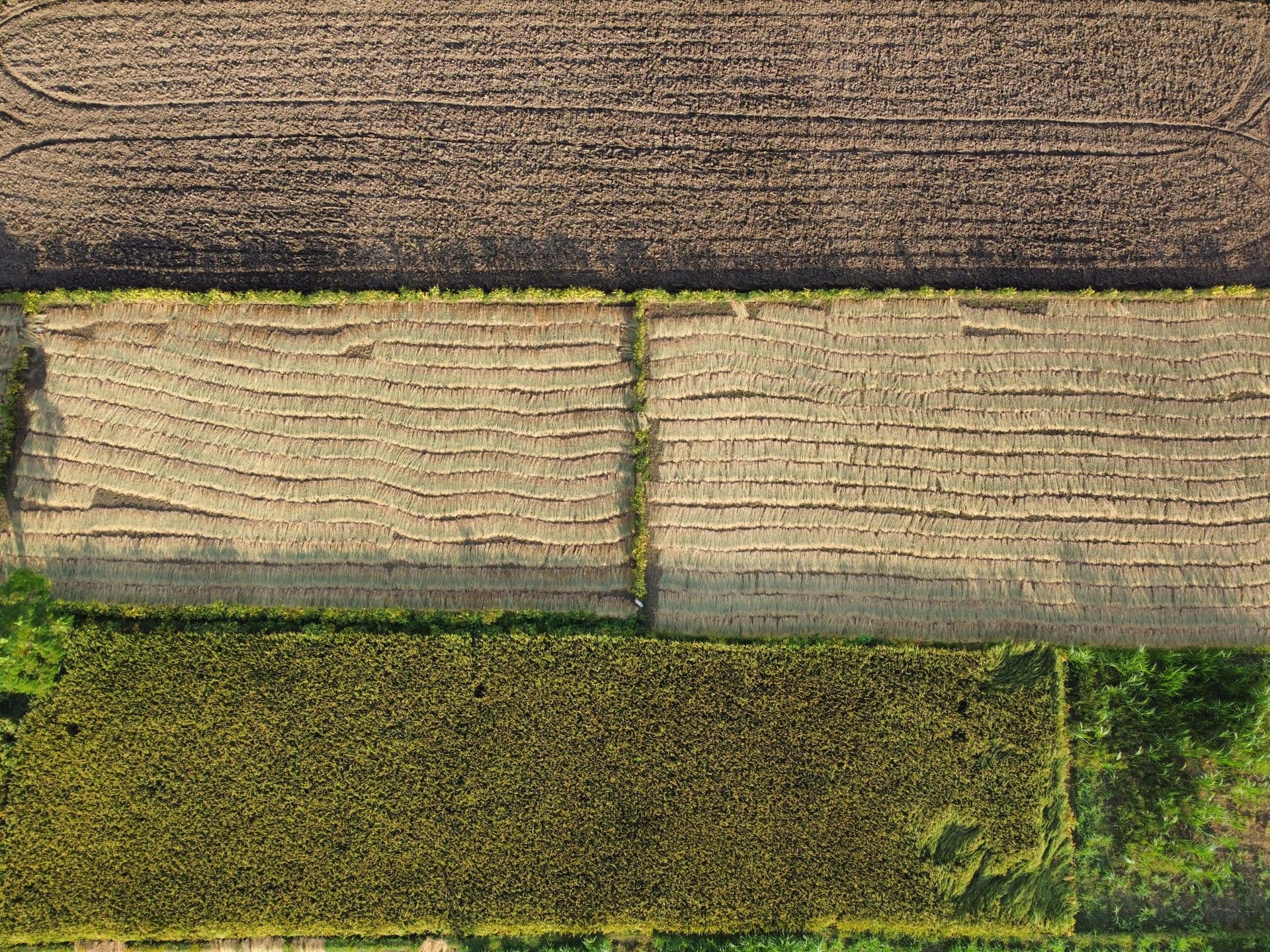
Cover large areas in less time — about 6 acres an hour — spraying uniformly along automated flight paths while cutting labour requirements.

DGCA Type-certified UAV
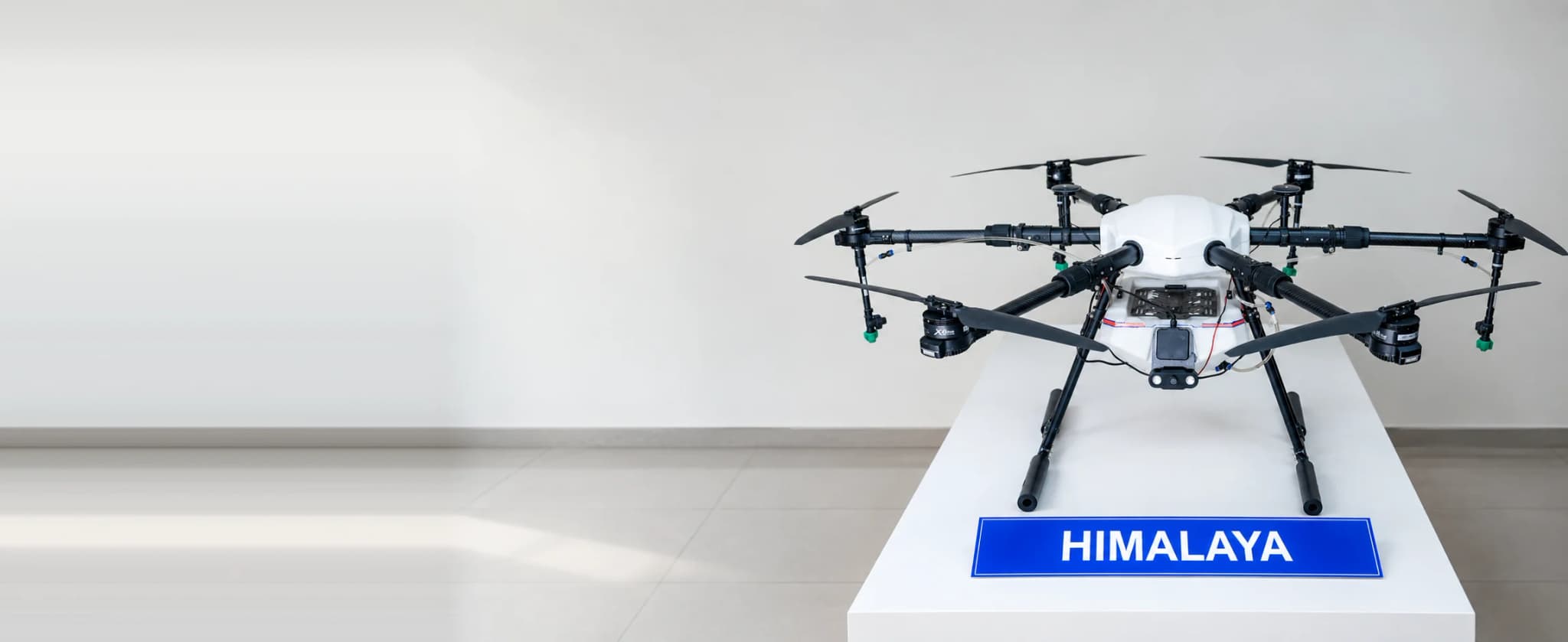
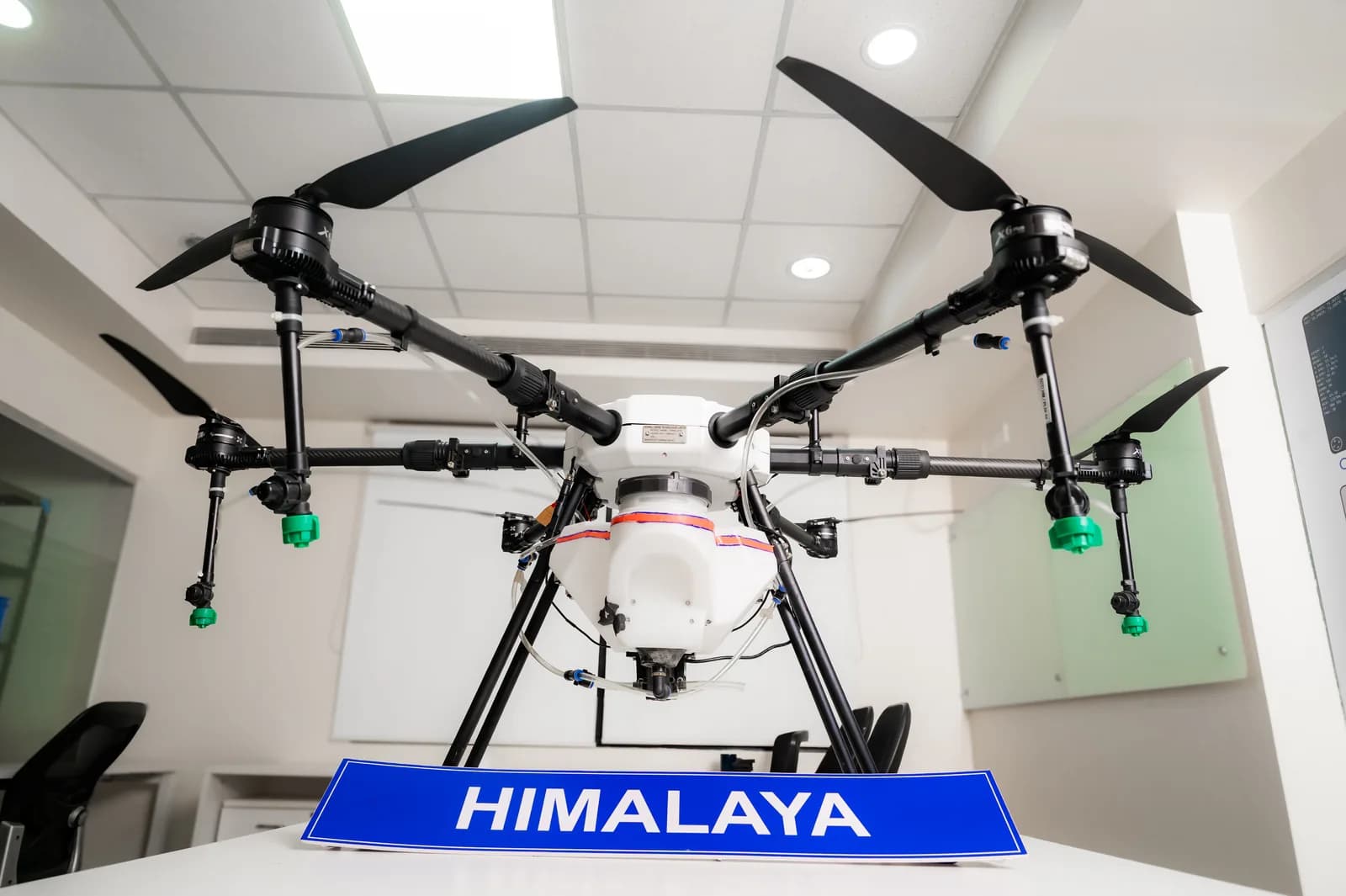
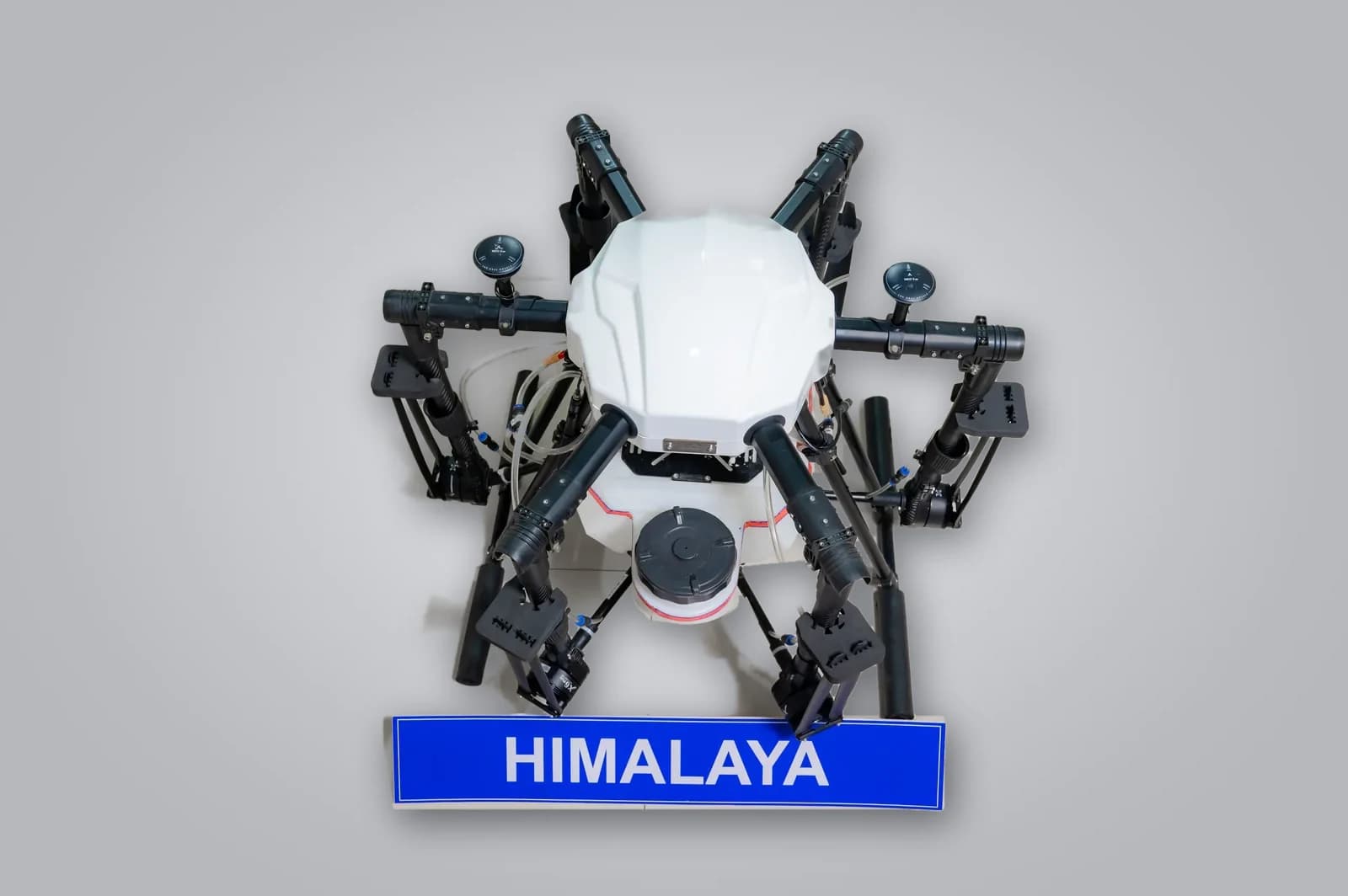
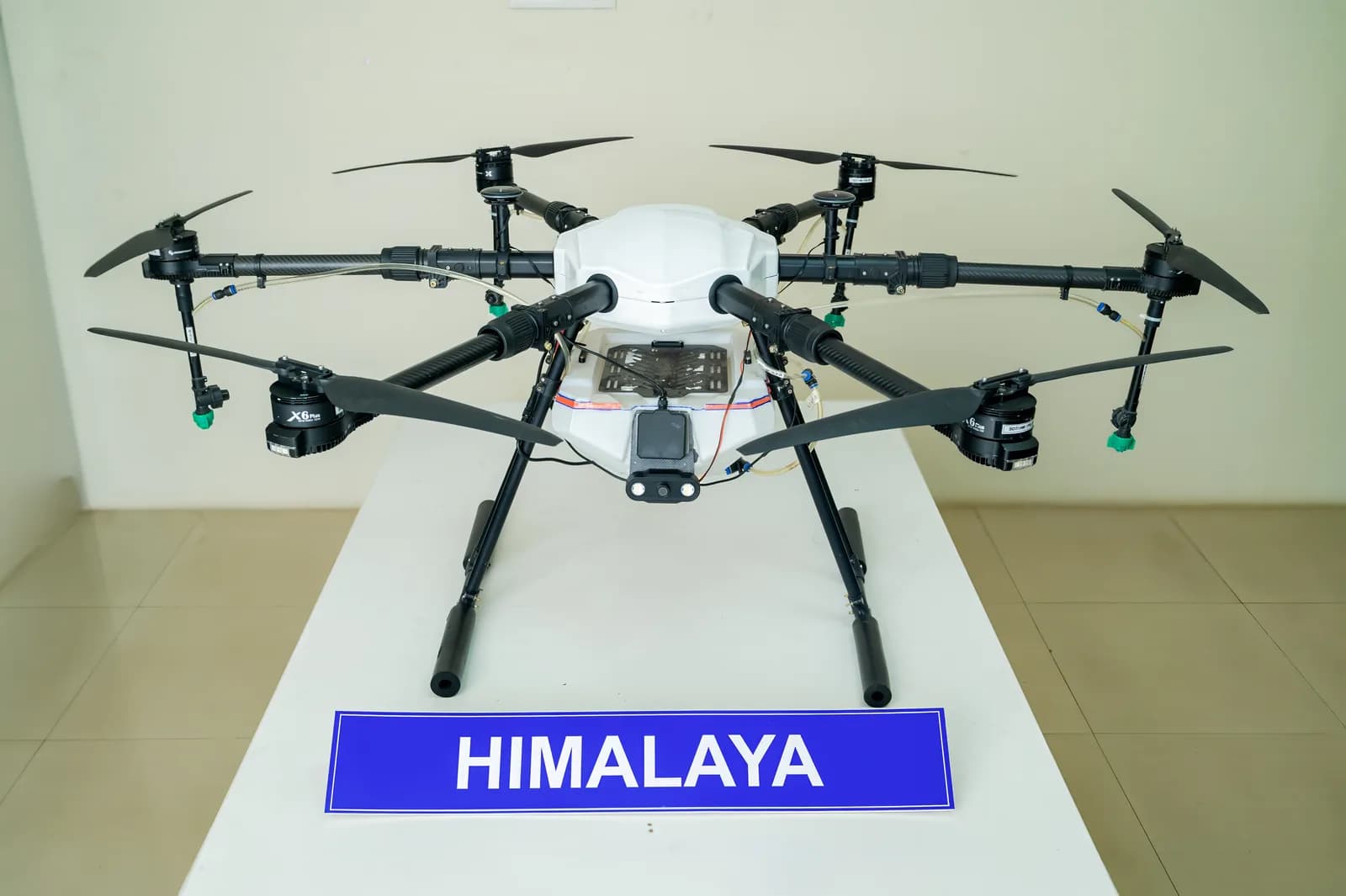
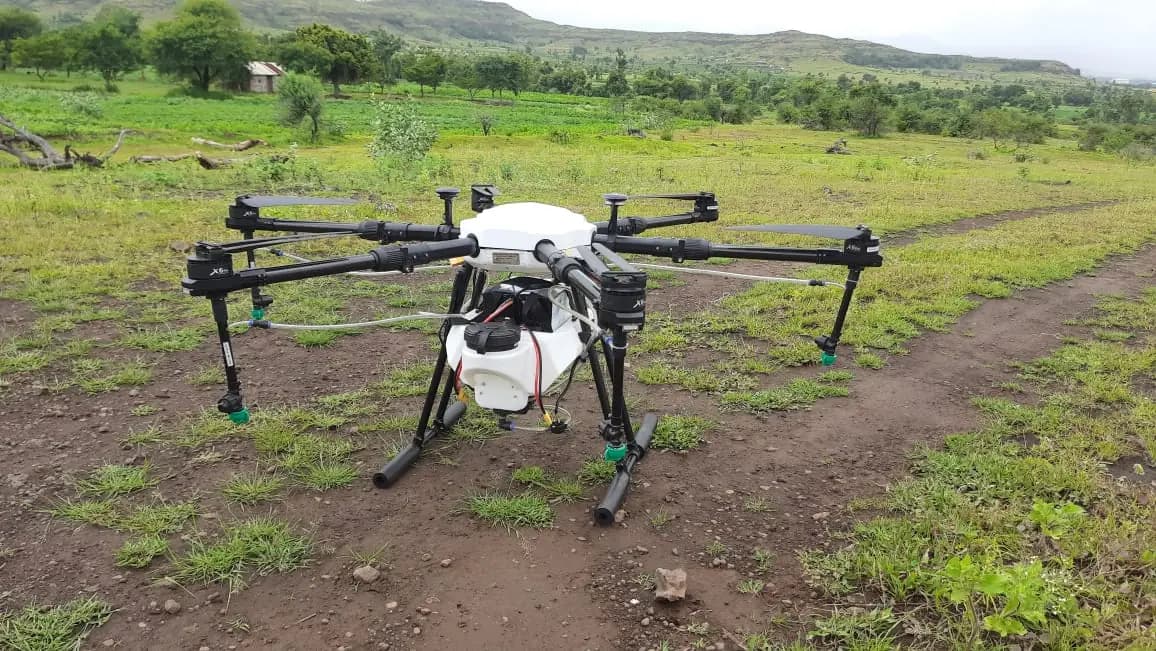
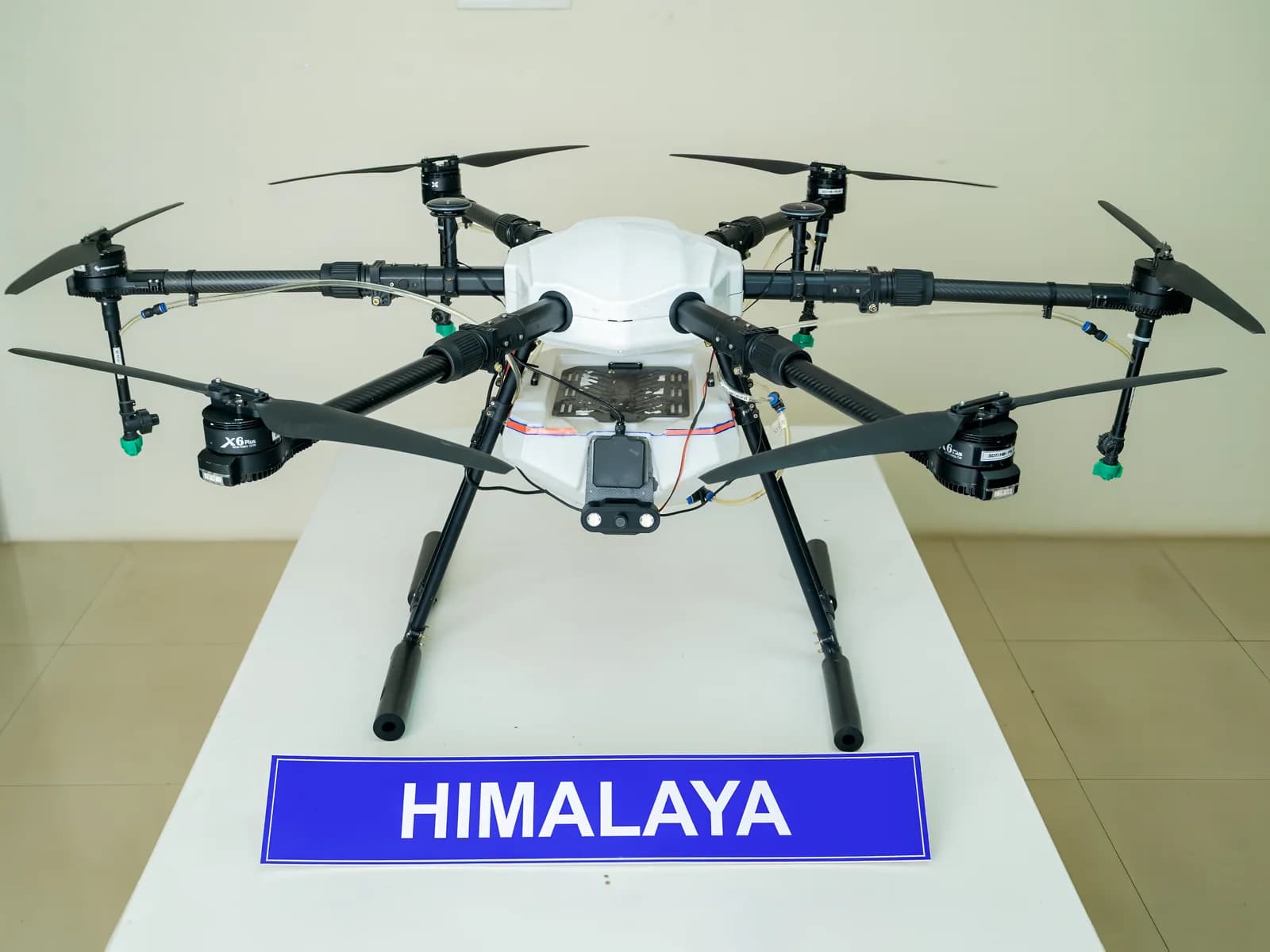
Schnell Drone Technologies' indigenous hexacopter HIMALAYA for agrochemical spraying — a 10 litre tank, four flat-jet nozzles and a full failsafe suite, Type-certified by the DGCA and built for Indian field conditions.
Per acre
Typical spraying time
Coverage per hour
Sustained coverage rate
Per day
With multiple battery sets
Tank capacity
Four flat-jet nozzles
Max all-up weight
Including full payload
Gallery
Key features & parameters
Product brochure
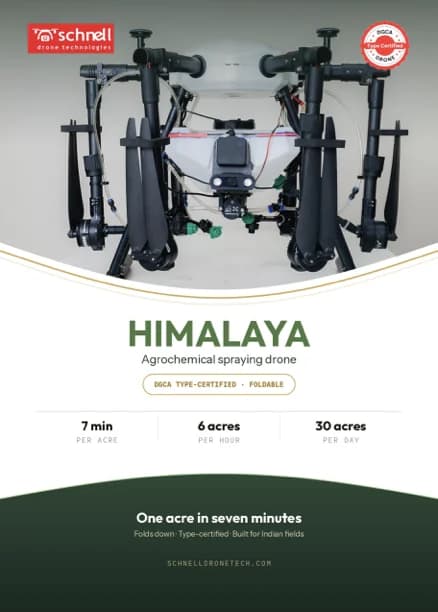
The full sales brochure — performance figures, the complete specification sheet from the DGCA type certificate, and distributor contact details.
Download brochurePDF · 1.2 MB · 4 pages
Overview
HIMALAYA is a medium-class rotorcraft built around a hexacopter airframe and designed for a single job: putting agrochemicals precisely where a crop needs them. Its 10 litre tank feeds four flat-jet nozzles, and a 25,200 mAh battery pack keeps it flying long enough to make each sortie count.
With DGCA type certification secured, HIMALAYA can be deployed across India — and it is the platform behind Schnell's rapid expansion into the agricultural drone spraying sector in the central and northern states.
Performance
Spraying rates below are from the type certification data sheet, measured with a full payload.
Per acre
Typical spraying time
Per hour
Sustained coverage rate
Per day
With multiple battery sets on rotation
Max endurance
13 min 19 sec loaded · 27 min 13 sec empty
Why spray with drones
Drone spraying changes the economics and the safety profile of crop protection — covering more ground, with less chemical, and without putting an operator inside the spray cloud.
Cover large areas in less time — about 6 acres an hour — spraying uniformly along automated flight paths while cutting labour requirements.
GPS and automated navigation apply the right dose to the right place, targeting specific areas and eliminating overlap and missed spots.
Controlled spraying minimises waste, lowering overall pesticide and fertilizer consumption and reducing environmental contamination.
Operators stay away from direct chemical exposure, never walk through freshly sprayed fields, and avoid the risks of difficult terrain.
Hilly, muddy, flooded or uneven fields are sprayed easily, including areas that tractors and other ground equipment simply cannot reach.
No foot traffic in the field means no trampled crop and none of the soil compaction that machinery leaves behind.
Fast deployment and rapid spraying make it practical to treat a crop inside the narrow window of a critical growth stage.
Low-volume spraying techniques require significantly less water than conventional methods — decisive in water-stressed districts.
Lower labour costs, reduced fuel consumption versus tractor-based spraying, and savings from less chemical and better crop protection.
In the field
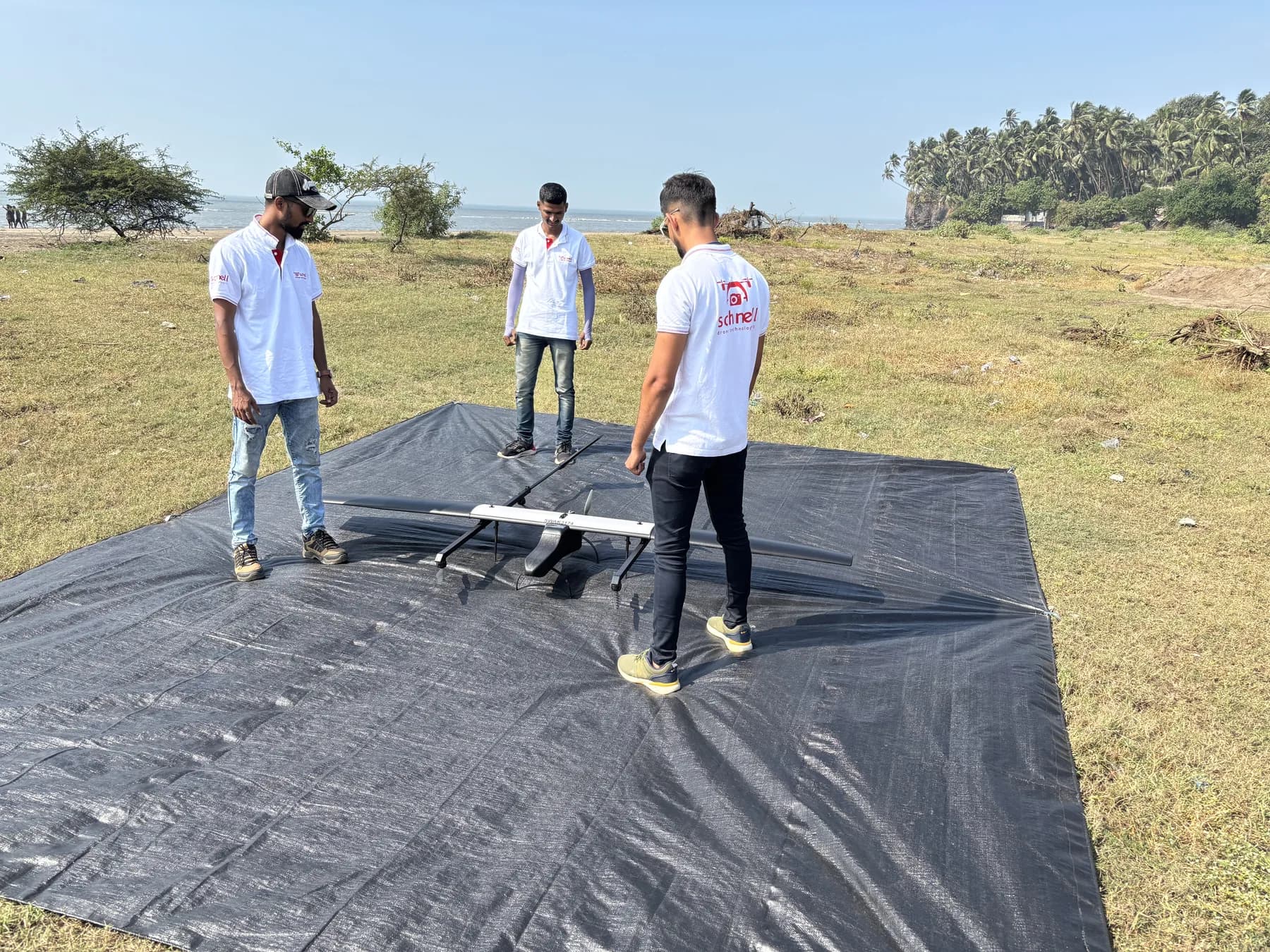
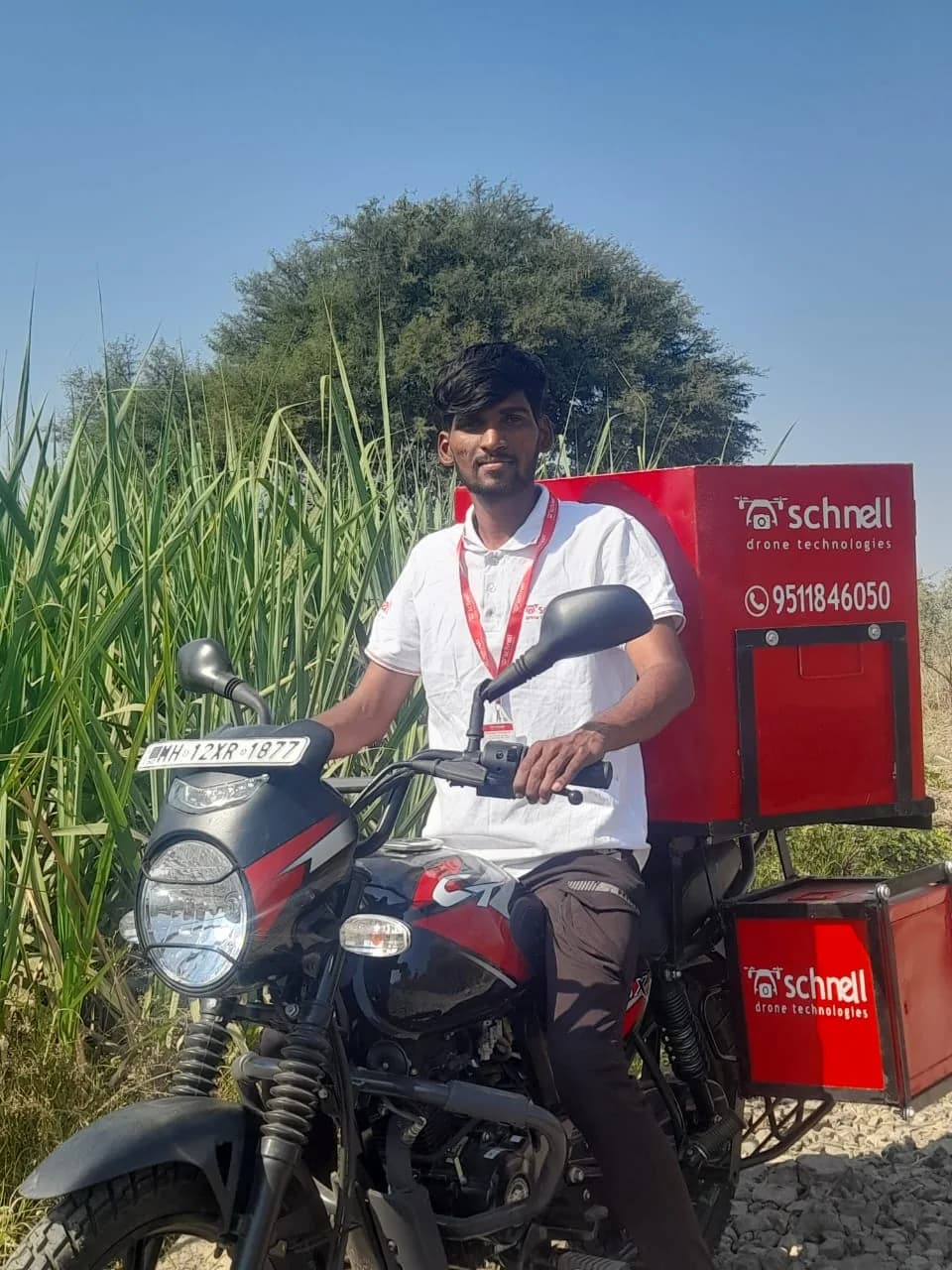
HIMALAYA in service with Schnell — ready for take-off on a field track, with our operators heading out on a spraying run, and on display with all six rotors deployed.
Questions
Speak to the product team about pricing, demonstrations, training and state-level distribution.